
ESP8266 Cảm biến cửa Còi Piezo
Hướng dẫn này sẽ chỉ cho bạn cách sử dụng ESP8266 và cảm biến cửa để kích hoạt buzzer Piezo. Chi tiết:
- ESP8266 phát ra âm thanh khi phát hiện cửa đang mở.
- ESP8266 ngừng phát ra âm thanh khi phát hiện cửa đã đóng.
- ESP8266 phát một bài hát khi phát hiện cửa đang mở.
Phần cứng cần chuẩn bị
| 1 | × | ESP8266 NodeMCU ESP-12F | Amazon | |
| 1 | × | Alternatively, ESP8266 D1 Mini NodeMCU ESP-12F | Amazon | |
| 1 | × | Micro USB Cable | Amazon | |
| 1 | × | Alternatively, ESP8266 NodeMCU ESP-12E (Uno-form) | Amazon | |
| 1 | × | USB Cable Type-A to Type-C (for USB-A PC) | Amazon | |
| 1 | × | USB Cable Type-C to Type-C (for USB-C PC) | Amazon | |
| 1 | × | cảm biến cửa | Amazon | |
| 1 | × | 3-24V Active Piezo Buzzer | Amazon | |
| 1 | × | Active Piezo Buzzer Module | Amazon | |
| 1 | × | Passive Piezo Buzzer Module | Amazon | |
| 1 | × | breadboard | Amazon | |
| 1 | × | dây jumper | Amazon | |
| 1 | × | (Khuyến nghị) Screw Terminal Expansion Board for ESP8266 | Amazon |
Or you can buy the following kits:
| 1 | × | DIYables Sensor Kit (18 sensors/displays) | Amazon |
Về chuông Piezo và cảm biến cửa
Nếu bạn thiếu kiến thức về chuông piezo và cảm biến cửa (bao gồm sơ đồ chân, chức năng, lập trình, v.v.), hãy tham khảo các bài hướng dẫn sau:
Sơ đồ đấu dây
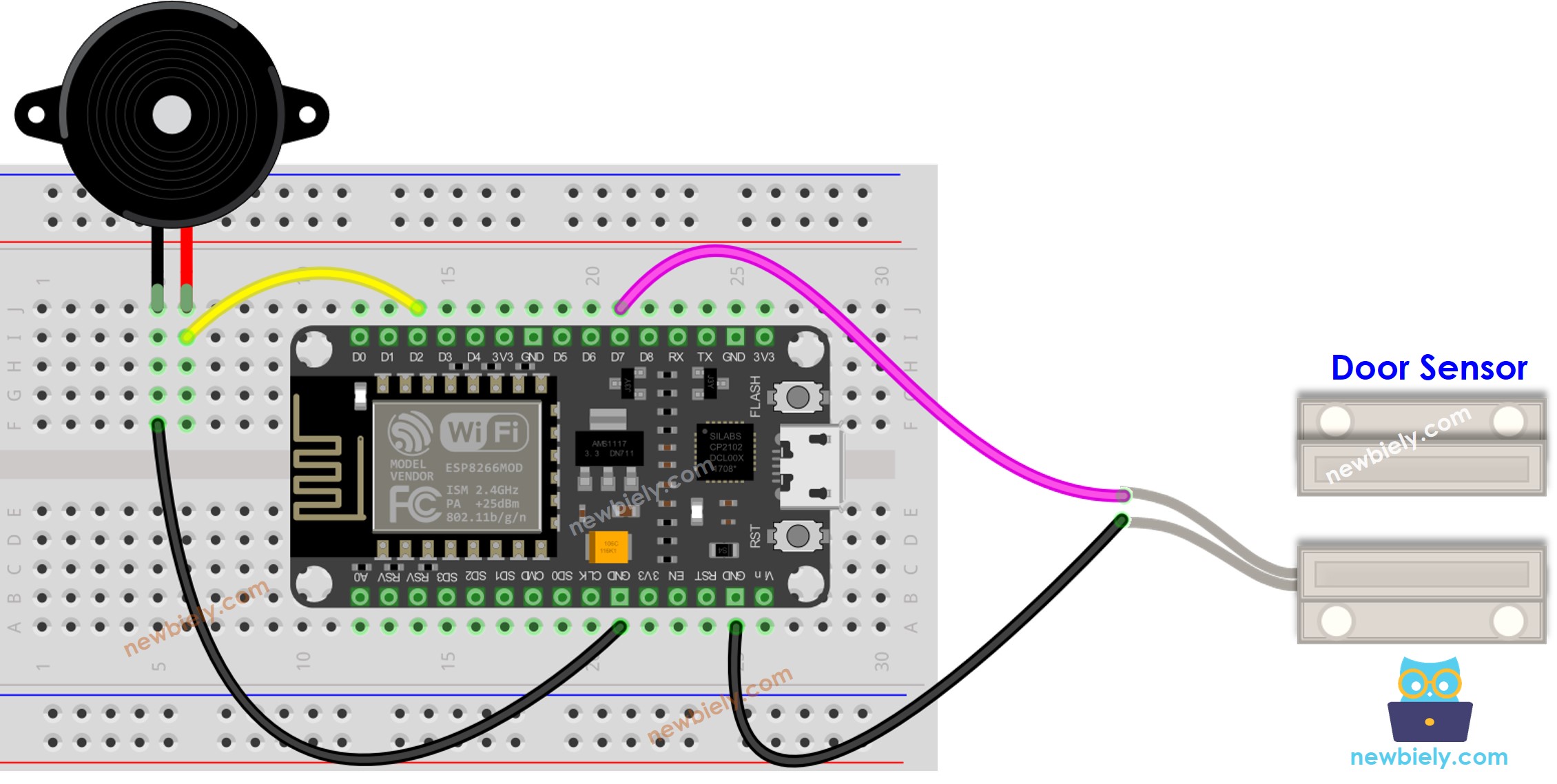
This image is created using Fritzing. Click to enlarge image
Xem thêm Sơ đồ chân ESP8266 và Cách cấp nguồn cho ESP8266.
Mã ESP8266 - Âm thanh đơn giản
Hướng dẫn từng bước
Để bắt đầu với ESP8266 trên Arduino IDE, hãy làm theo các bước sau:
- Kiểm tra bài hướng dẫn ESP8266 - Cài đặt phần mềm nếu đây là lần đầu tiên bạn sử dụng ESP8266.
- Nối các thành phần như được thể hiện trong sơ đồ.
- Kết nối ESP8266 với máy tính bằng cáp USB.
- Mở Arduino IDE trên máy tính của bạn.
- Chọn bo mạch ESP8266 phù hợp, ví dụ NodeMCU 1.0 (ESP-12E Module), và cổng COM tương ứng của nó.
- Kết nối ESP8266 với PC bằng cáp USB.
- Mở Arduino IDE, chọn bo mạch và cổng phù hợp.
- Sao chép mã và mở nó trong Arduino IDE.
- Nhấp nút Upload trong Arduino IDE để biên dịch và tải mã lên ESP8266.
- Đưa nam châm lại gần công tắc reed và sau đó di chuyển nó đi xa lần nữa.
- Nghe âm thanh từ buzzer Piezo.
Giải thích mã nguồn
Hãy xem lời giải thích theo từng dòng được chứa trong các chú thích của mã nguồn!
Mã ESP8266 - Giai điệu
Hướng dẫn từng bước
- Nối các linh kiện như được hiển thị trong sơ đồ.
- Kết nối board ESP8266 với máy tính của bạn bằng cáp USB.
- Mở Arduino IDE trên máy tính của bạn.
- Chọn bo mạch ESP8266 phù hợp, chẳng hạn NodeMCU 1.0 (ESP-12E Module), và cổng COM tương ứng của nó.
- Sao chép mã và mở nó bằng Arduino IDE.
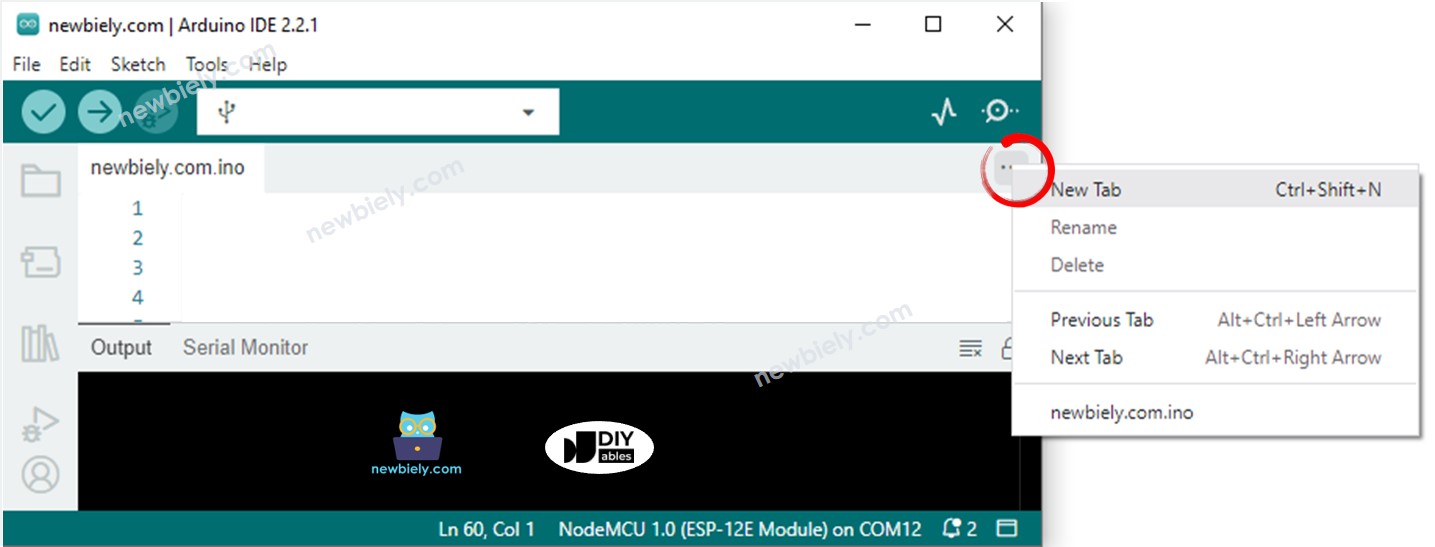
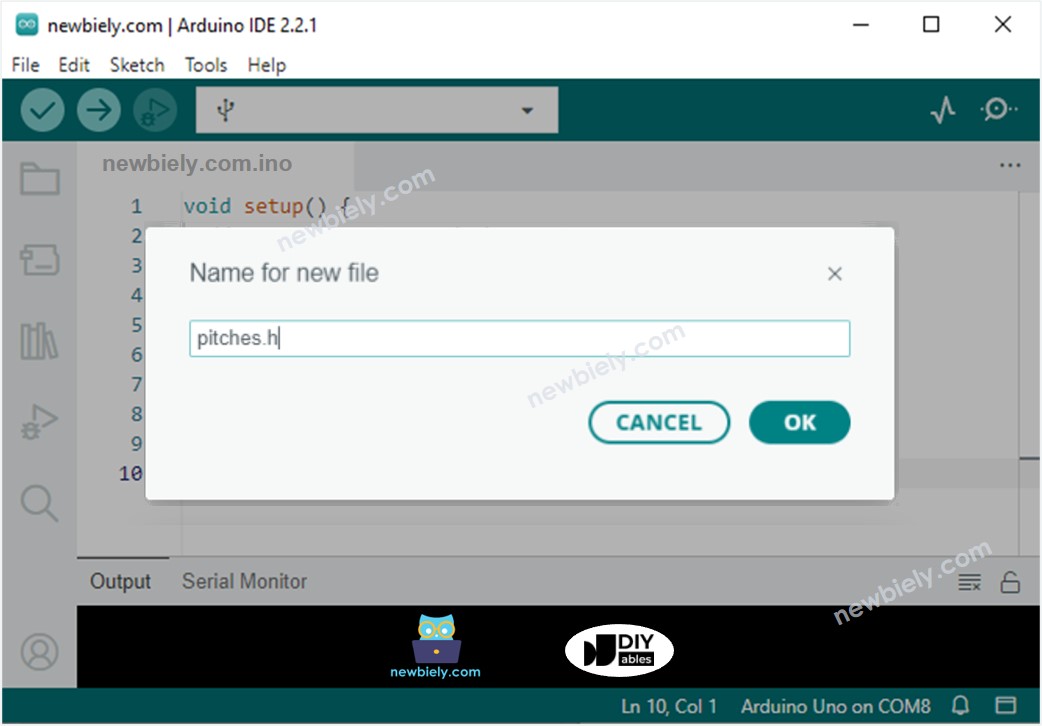
- Tạo tệp pitches.h trên Arduino IDE bằng cách:
- Hoặc nhấp vào nút ngay bên dưới biểu tượng Serial Monitor và chọn New Tab, hoặc dùng phím Ctrl+Shift+N.
- Đặt tên cho tệp tin pitches.h và nhấn nút OK
- Sao chép mã dưới đây và dán nó vào tệp được tạo pitches.h
- Nhấn nút Tải lên trên Arduino IDE để biên dịch và tải mã lên ESP8266.
- Kéo nam châm ra xa công tắc từ của cảm biến cửa để mô phỏng cửa đang mở.
- Nghe giai điệu của còi Piezo.
Giải thích mã nguồn
Đọc lời giải thích theo từng dòng trong các chú thích của mã nguồn!
Xem mô tả theo từng dòng được tìm thấy trong các chú thích của mã nguồn!
Khám phá các chú thích theo từng dòng được tích hợp trong mã nguồn!
Xem các chú thích theo từng dòng có trong phần bình luận của mã nguồn!
Video Tutorial
Việc sản xuất video tốn rất nhiều thời gian. Nếu video hướng dẫn hữu ích cho việc học của bạn, hãy đăng ký kênh YouTube để ủng hộ. Nếu nhu cầu đủ cao, chúng tôi sẽ cố gắng làm thêm nhiều video.
Bài hướng dẫn liên quan
📱 Ứng dụng đề xuất
 English for KidsHọc tiếng Anh vui nhộn cho trẻ nhỏ.Tải về trênGoogle PlayTải về trênApp Store
 Bubble NoteGhi chú tự xóa — viết như nhắn tin.Tải về trênGoogle PlayTải về trênApp Store
 Tôi Không MuaĐánh bại mua sắm bốc đồng, tiết kiệm hơn.Tải về trênGoogle PlayTải về trênApp Store
 Con Đường Tri ThứcBài thi thử để học mọi thứ.Tải về trênGoogle PlayTải về trênApp Store