
ESP8266 Đồng hồ OLED
Hướng dẫn này chỉ cho bạn cách tạo đồng hồ OLED bằng ESP8266, module RTC và màn hình OLED. Hướng dẫn cung cấp các bước cho cả hai module RTC DS3231 và DS1307. Cụ thể:
- ESP8266 lấy giờ, phút và giây từ một mô-đun RTC DS3231 và hiển thị nó trên một màn hình OLED
- ESP8266 lấy giờ, phút và giây từ một mô-đun RTC DS1307 và hiển thị nó trên một màn hình OLED
Bạn có thể chọn một trong hai module RTC: DS3231 và DS1307. Để biết thêm thông tin, vui lòng tham khảo DS3231 vs DS1307.
Phần cứng cần chuẩn bị
| 1 | × | ESP8266 NodeMCU ESP-12F | Amazon | |
| 1 | × | Alternatively, ESP8266 D1 Mini NodeMCU ESP-12F | Amazon | |
| 1 | × | Micro USB Cable | Amazon | |
| 1 | × | Alternatively, ESP8266 NodeMCU ESP-12E (Uno-form) | Amazon | |
| 1 | × | USB Cable Type-A to Type-C (for USB-A PC) | Amazon | |
| 1 | × | USB Cable Type-C to Type-C (for USB-C PC) | Amazon | |
| 1 | × | SSD1306 I2C OLED Display 128x64 | Amazon | |
| 1 | × | SSD1306 I2C OLED Display 128x32 | Amazon | |
| 1 | × | Real-Time Clock DS3231 Module | Amazon | |
| 1 | × | (Tùy chọn) Real-Time Clock DS1307 Module | Amazon | |
| 1 | × | CR2032 battery | Amazon | |
| 1 | × | breadboard | Amazon | |
| 1 | × | dây jumper | Amazon | |
| 1 | × | (Khuyến nghị) Screw Terminal Expansion Board for ESP8266 | Amazon |
Or you can buy the following kits:
| 1 | × | DIYables Sensor Kit (18 sensors/displays) | Amazon |
Về mô-đun OLED, DS3231 và DS1307 RTC
Nếu bạn chưa quen với OLED, DS3231 và DS1307 (bố trí chân, chức năng, lập trình ...), các bài hướng dẫn sau đây có thể giúp bạn:
Cài đặt thư viện OLED và RTC
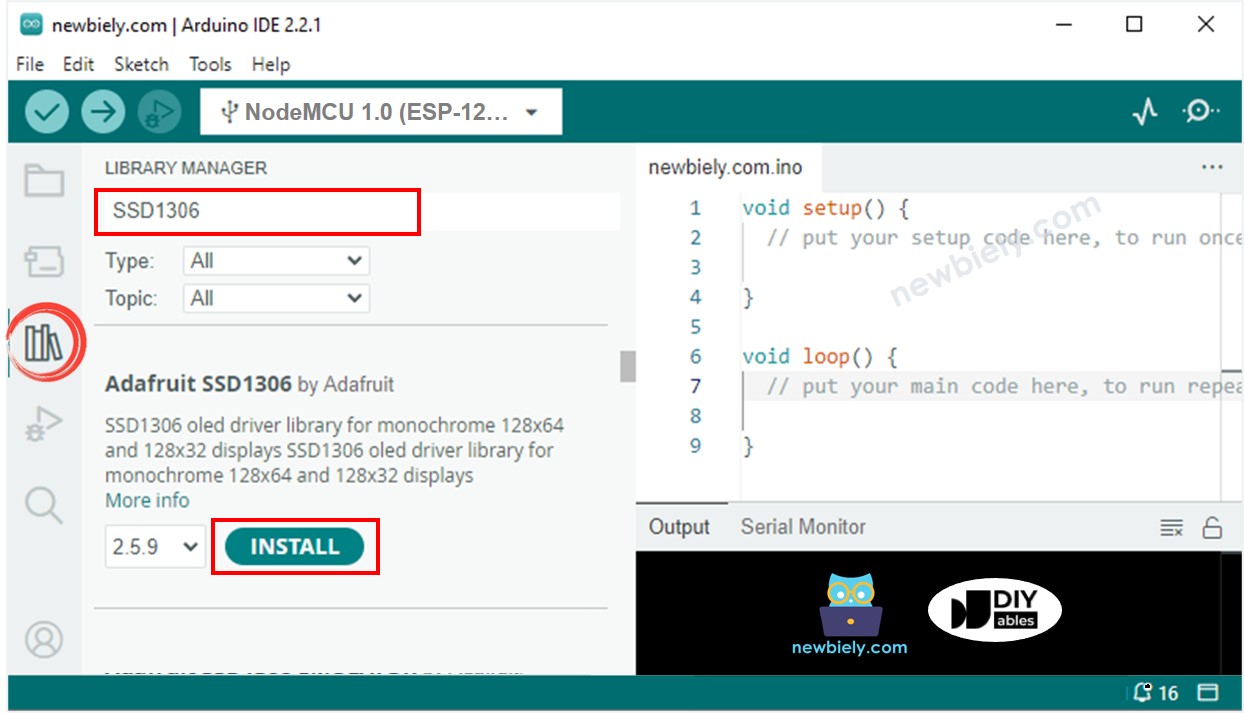
- Nhấp vào biểu tượng Thư viện ở thanh bên trái của Arduino IDE.
- Tìm kiếm “SSD1306” và tìm thấy thư viện SSD1306 từ Adafruit.
- Sau đó, nhấn nút Cài đặt để hoàn tất quá trình cài đặt.
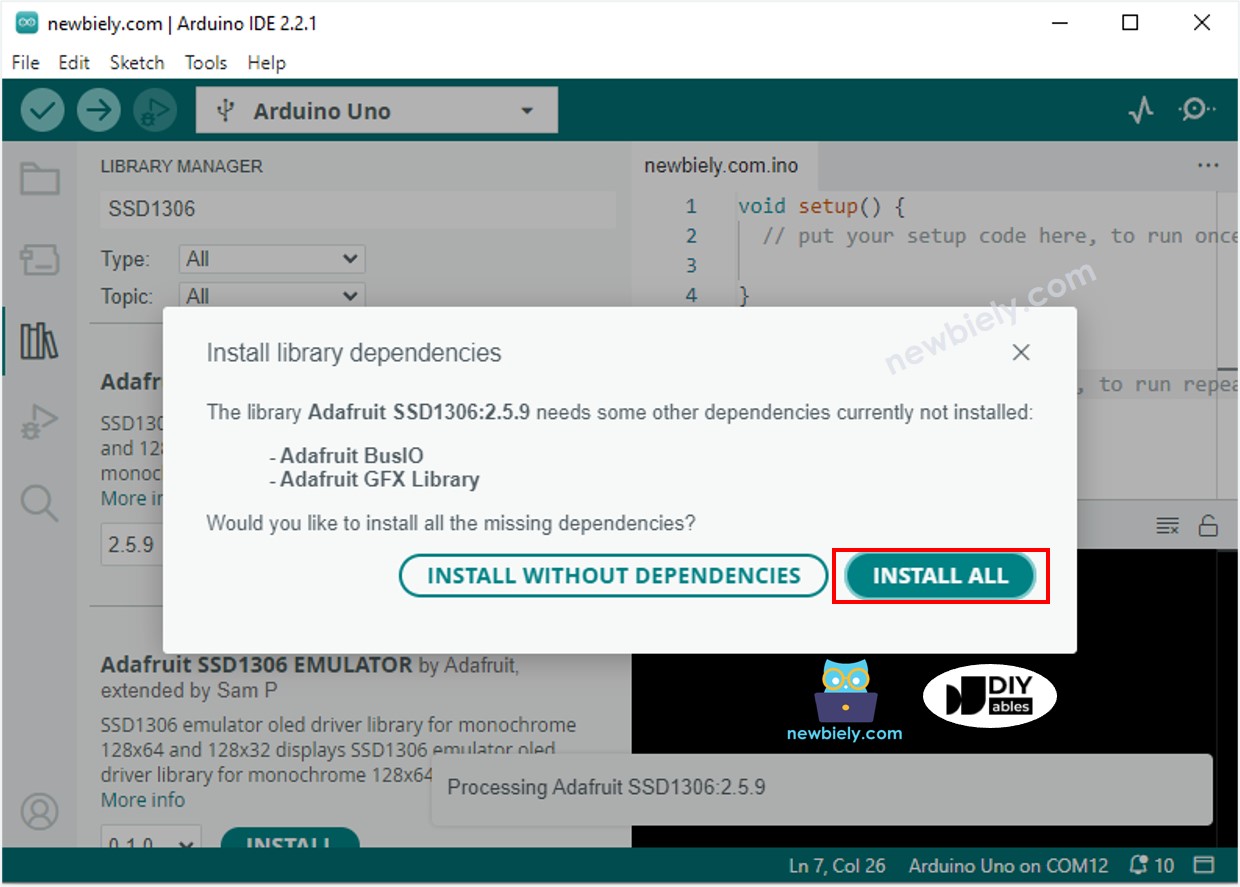
- Bạn sẽ được nhắc cài đặt thêm các phụ thuộc thư viện.
- Để cài đặt chúng đồng thời, hãy nhấp vào nút Cài đặt Tất cả.
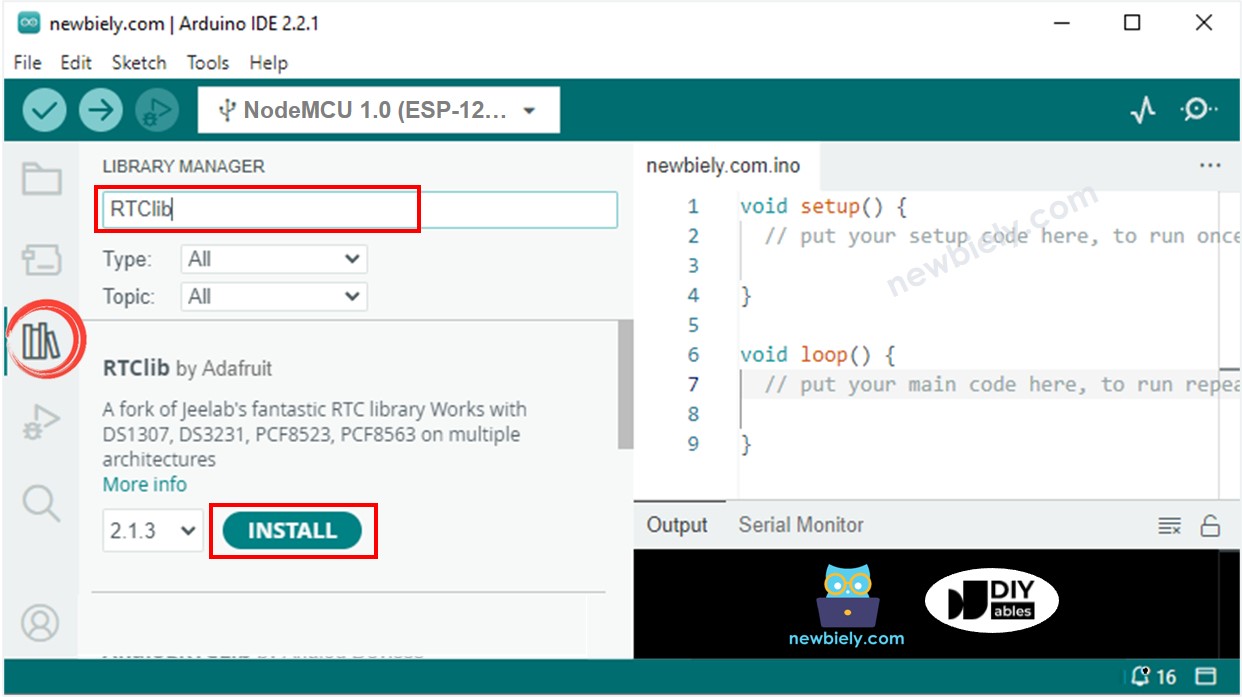
- Tìm kiếm “RTClib” và xác định thư viện RTC từ Adafruit. Thư viện này tương thích với cả DS3231 và DS1307.
- Nhấn nút Cài đặt để cài đặt thư viện RTC.
Đọc thời gian từ mô-đun DS3231 RTC và hiển thị thời gian lên OLED
Sơ đồ mạch điện
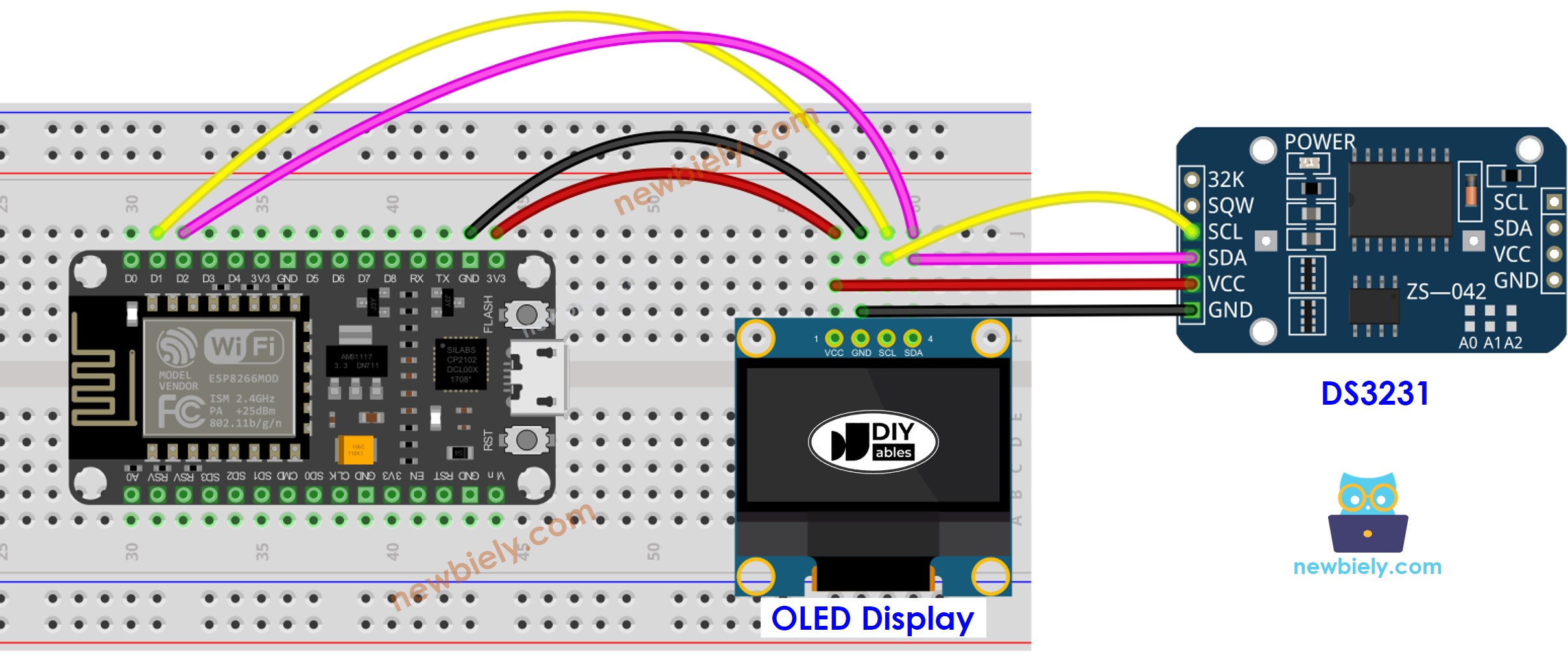
This image is created using Fritzing. Click to enlarge image
Xem thêm Sơ đồ chân ESP8266 và Cách cấp nguồn cho ESP8266.
Mã ESP8266 - DS3231 và OLED
Hướng dẫn từng bước
Để bắt đầu với ESP8266 trên Arduino IDE, hãy làm theo các bước sau:
- Hãy xem hướng dẫn ESP8266 - Cài đặt phần mềm nếu đây là lần đầu bạn sử dụng ESP8266.
- Gắn các thành phần như được thể hiện trong sơ đồ.
- Kết nối bo mạch ESP8266 với máy tính của bạn bằng cáp USB.
- Mở Arduino IDE trên máy tính của bạn.
- Chọn bo mạch ESP8266 phù hợp, chẳng hạn như (ví dụ NodeMCU 1.0 (ESP-12E Module)), và cổng COM tương ứng của nó.
- Sao chép mã và mở nó bằng Arduino IDE.
- Nhấp nút Tải lên trong Arduino IDE để gửi mã đến ESP8266.
- Đặt cảm biến vào nước nóng và nước lạnh, hoặc giữ nó trong tay.
- Xem kết quả trên OLED.
Đọc thời gian từ mô-đun RTC DS1307 và hiển thị thời gian lên OLED
Sơ đồ dây điện
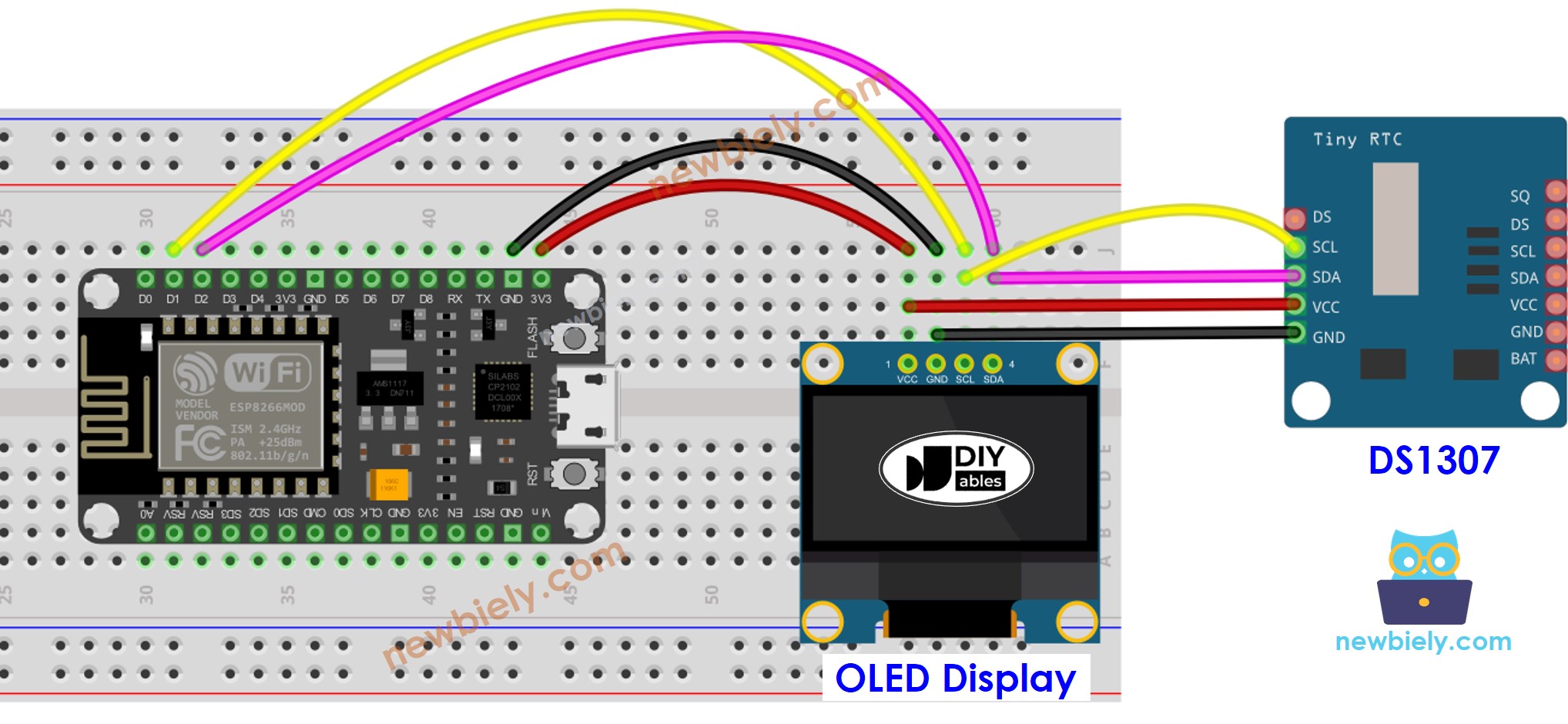
This image is created using Fritzing. Click to enlarge image
Mã ESP8266 - DS1307 và OLED
Hướng dẫn từng bước
- Nối các thành phần như thể hiện trong sơ đồ.
- Kết nối bo mạch ESP8266 với máy tính bằng cáp USB.
- Mở Arduino IDE trên máy tính của bạn.
- Chọn bo mạch ESP8266 phù hợp, ví dụ (NodeMCU 1.0 (ESP-12E Module)), và cổng COM tương ứng.
- Sao chép mã và mở nó trong Arduino IDE.
- Nhấp nút Upload để tải mã lên ESP8266.
- Đặt cảm biến vào nước nóng và nước lạnh hoặc cầm nó trong tay.
- Xem kết quả trên OLED.
Video Tutorial
Việc sản xuất video tốn rất nhiều thời gian. Nếu video hướng dẫn hữu ích cho việc học của bạn, hãy đăng ký kênh YouTube để ủng hộ. Nếu nhu cầu đủ cao, chúng tôi sẽ cố gắng làm thêm nhiều video.
Bài hướng dẫn liên quan
📱 Ứng dụng đề xuất
 English for KidsHọc tiếng Anh vui nhộn cho trẻ nhỏ.Tải về trênGoogle PlayTải về trênApp Store
 Bubble NoteGhi chú tự xóa — viết như nhắn tin.Tải về trênGoogle PlayTải về trênApp Store
 Tôi Không MuaĐánh bại mua sắm bốc đồng, tiết kiệm hơn.Tải về trênGoogle PlayTải về trênApp Store
 Con Đường Tri ThứcBài thi thử để học mọi thứ.Tải về trênGoogle PlayTải về trênApp Store