
Arduino UNO R4 Button Debounce
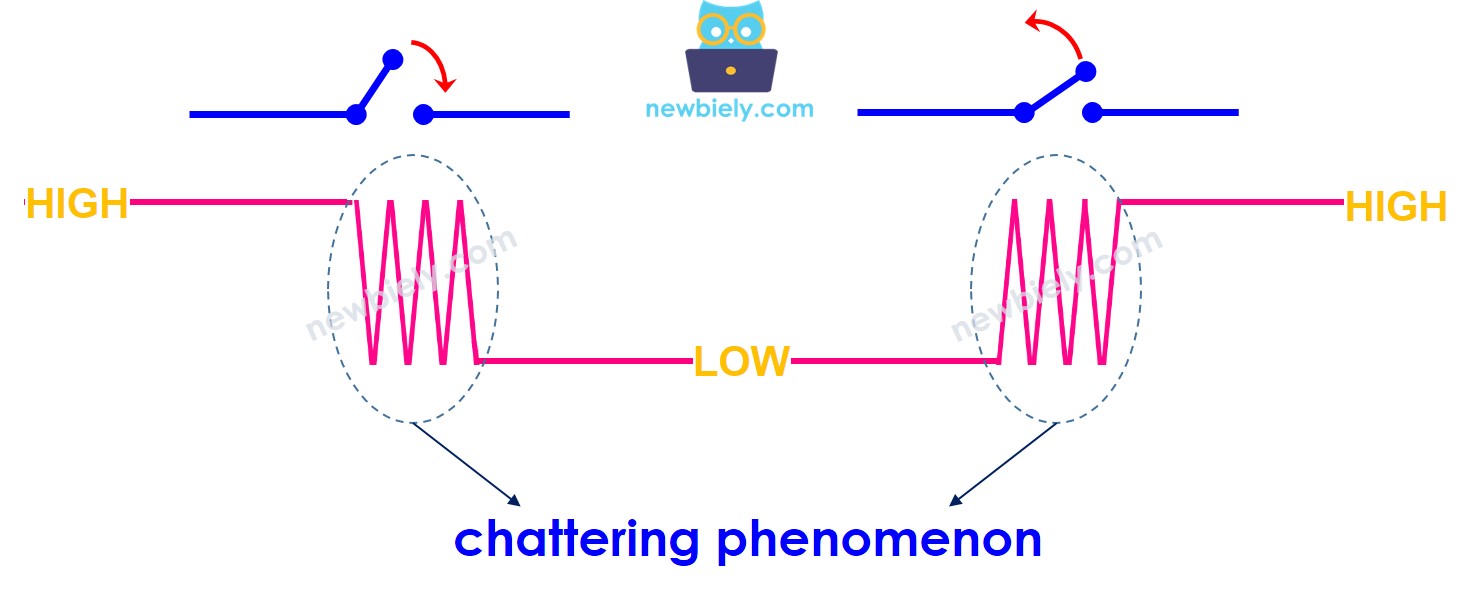
Khi lập trình Arduino Uno R4 để phát hiện sự kiện nhấn nút (button press), bạn có thể thấy rằng một lần nhấn được phát hiện nhiều lần. Điều này xảy ra vì do các yếu tố cơ học, button hoặc switch có thể chuyển đổi nhanh chóng giữa LOW và HIGH nhiều lần. Hiện tượng này được gọi là "chattering" (rung phím). Chattering có thể khiến một lần nhấn nút được phát hiện như nhiều lần nhấn, điều này có thể gây ra lỗi trong một số ứng dụng. Tutorial này giải thích cách khắc phục vấn đề này, một quá trình được gọi là debouncing button.
Phần Cứng Cần Thiết
| 1 | × | Arduino UNO R4 WiFi hoặc Arduino UNO R4 Minima | ||
| 1 | × | (Tùy chọn) DIYables STEM V4 IoT, tương thích với Arduino Uno R4 WiFi | Amazon | |
| 1 | × | Arduino UNO R4 Minima (Thay thế) | Amazon | |
| 1 | × | Cáp USB Type-C | Amazon | |
| 1 | × | Button gắn Breadboard có nắp | Amazon | |
| 1 | × | Bộ Kit Button gắn Breadboard | Amazon | |
| 1 | × | Nút Nhấn gắn Panel | Amazon | |
| 1 | × | mô-đun nút nhấn | Amazon | |
| 1 | × | breadboard | Amazon | |
| 1 | × | Dây Jumper | Amazon | |
| 1 | × | (Khuyến nghị) Screw Terminal Block Shield for Arduino UNO R4 | Amazon | |
| 1 | × | (Khuyến nghị) Sensors/Servo Expansion Shield for Arduino UNO R4 | Amazon | |
| 1 | × | (Khuyến nghị) Breadboard Shield for Arduino UNO R4 | Amazon | |
| 1 | × | (Khuyến nghị) Enclosure for Arduino UNO R4 | Amazon | |
| 1 | × | (Khuyến nghị) Power Splitter for Arduino UNO R4 | Amazon | |
| 1 | × | (Khuyến nghị) Prototyping Base Plate & Breadboard Kit for Arduino UNO | Amazon |
Or you can buy the following kits:
| 1 | × | DIYables STEM V4 IoT Starter Kit (Arduino included) | Amazon | |
| 1 | × | DIYables Sensor Kit (18 sensors/displays) | Amazon |
Sơ Đồ Đấu Nối
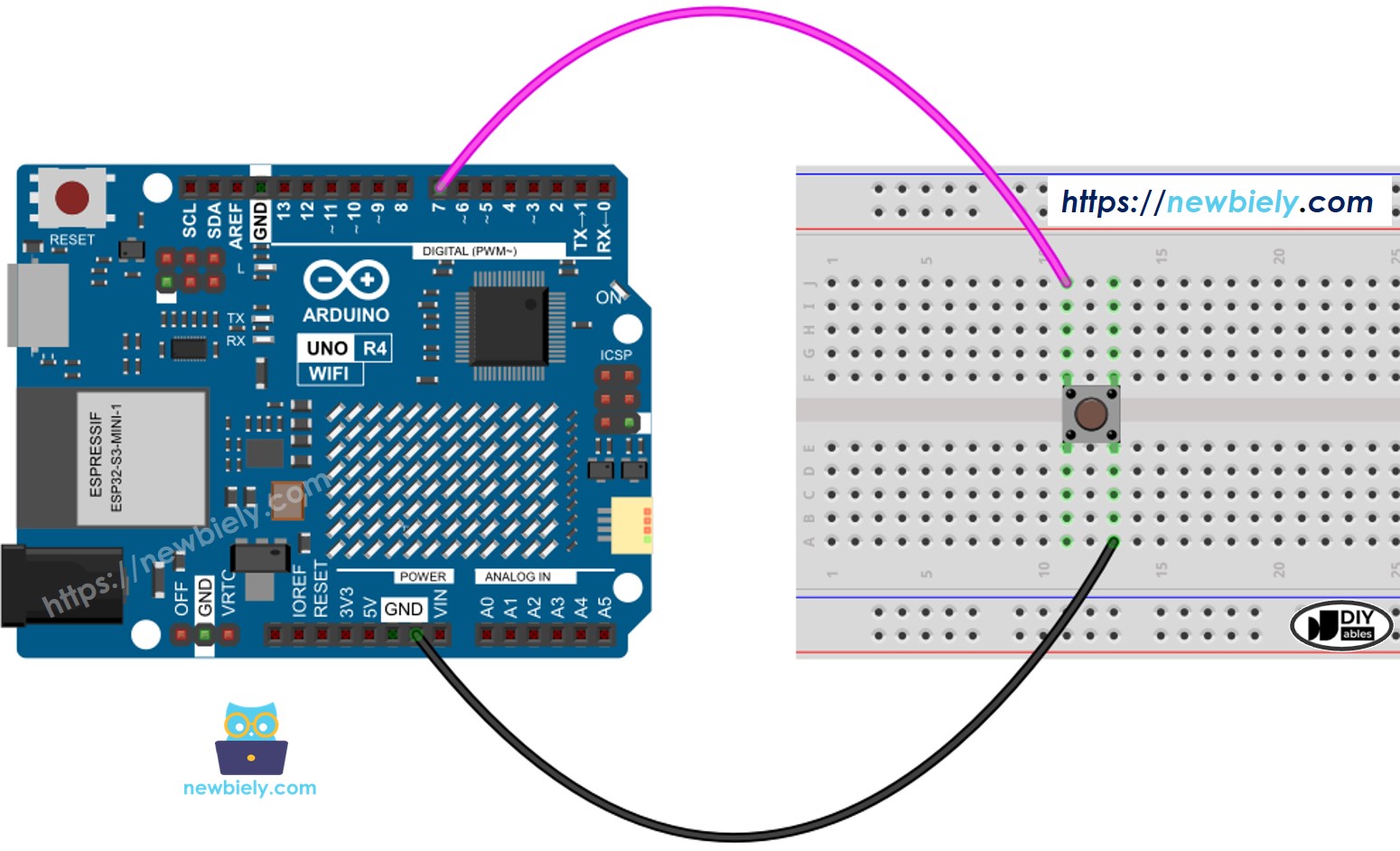
This image is created using Fritzing. Click to enlarge image
Hãy cùng kiểm tra và so sánh code Arduino UNO R4 không có và có debounce, và quan sát hoạt động của chúng.
Arduino Uno R4 - Button không có Debounce
Trước khi chúng ta tìm hiểu về debouncing, hãy xem code không có debounce và quan sát cách hoạt động của nó.
Các Bước Thực Hiện
Thực hiện theo các hướng dẫn từng bước sau:
- Nếu đây là lần đầu tiên bạn sử dụng Arduino Uno R4 WiFi/Minima, hãy tham khảo tutorial về Arduino UNO R4 - Cài Đặt Phần Mềm.
- Đấu nối các linh kiện theo sơ đồ được cung cấp.
- Kết nối board Arduino Uno R4 với máy tính của bạn bằng cáp USB.
- Khởi động Arduino IDE trên máy tính của bạn.
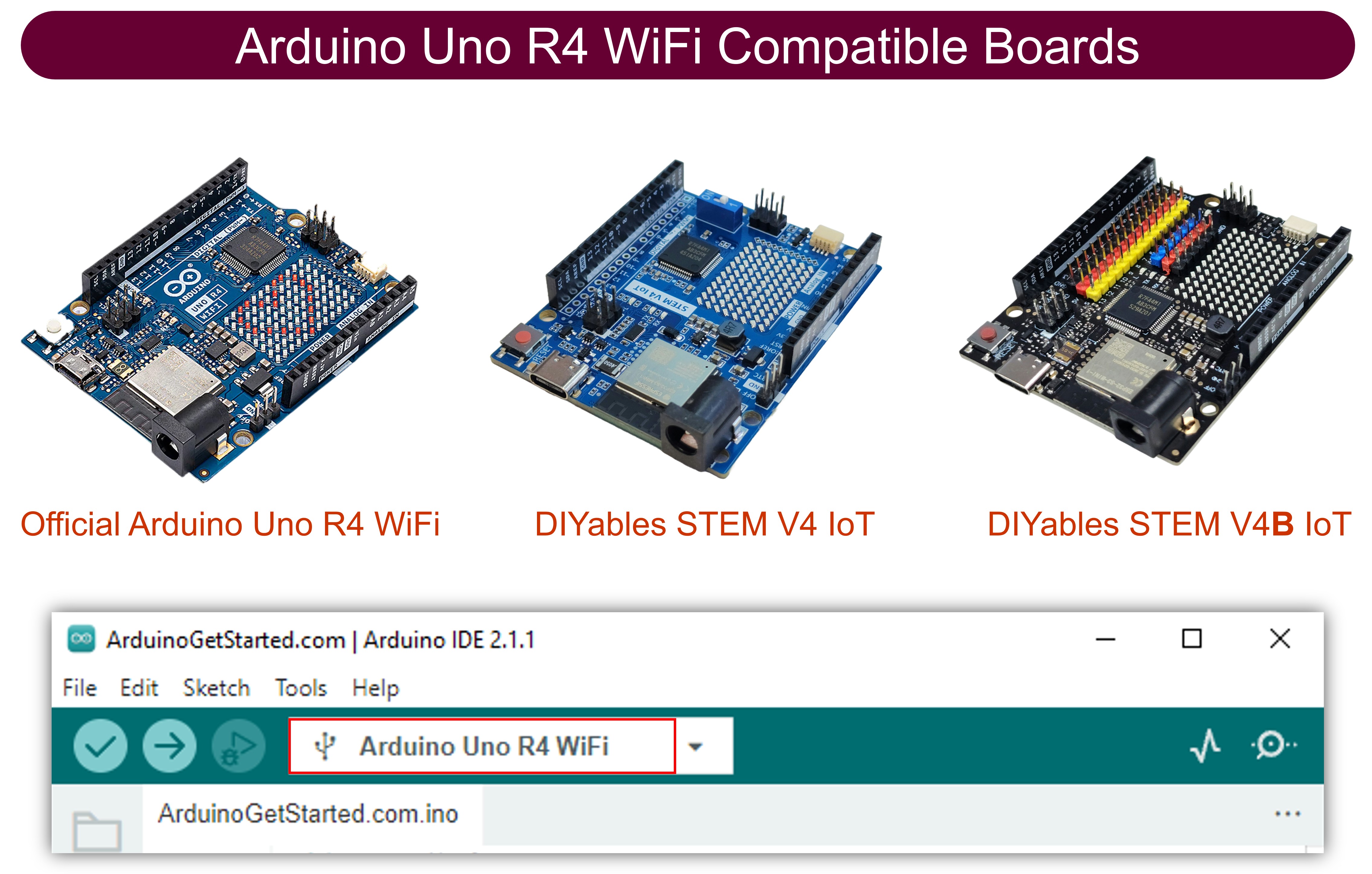
- Chọn board Arduino Uno R4 phù hợp (ví dụ: Arduino Uno R4 WiFi) và COM port.
- Sao chép code trên và mở trong Arduino IDE.
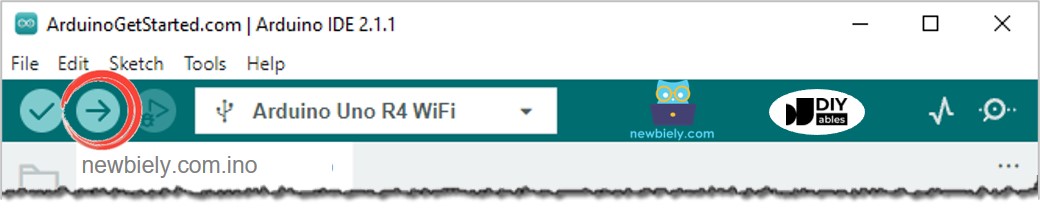
- Nhấn nút Upload trong Arduino IDE để gửi code đến Arduino UNO R4.
- Mở Serial Monitor.
- Nhấn và giữ button trong vài giây, sau đó thả ra.
- Kiểm tra kết quả trong Serial Monitor.
Như bạn có thể thấy, bạn chỉ nhấn và thả button một lần. Tuy nhiên, Arduino nhận biết nó như nhiều lần nhấn và thả.
※ Lưu ý:
Giá trị của DEBOUNCE_TIME thay đổi tùy theo từng ứng dụng khác nhau. Mỗi ứng dụng có thể sử dụng một giá trị riêng.
Chúng Tôi Đã Làm Cho Nó Đơn Giản: Code Arduino UNO R4 Button Debounce Sử Dụng Thư Viện
Chúng tôi đã tạo ra một cách đơn giản hơn cho người mới bắt đầu sử dụng nhiều button bằng cách tạo một thư viện tên là ezButton. Bạn có thể tìm hiểu thêm về thư viện ezButton tại đây.
Hãy xem một số code ví dụ.
Code Arduino UNO R4 Button Debounce Cho Một Button Đơn
Code Arduino UNO R4 Button Debounce Cho Nhiều Button
Hãy debounce cho 3 button. Đây là sơ đồ đấu nối giữa Arduino UNO R4 và ba button:
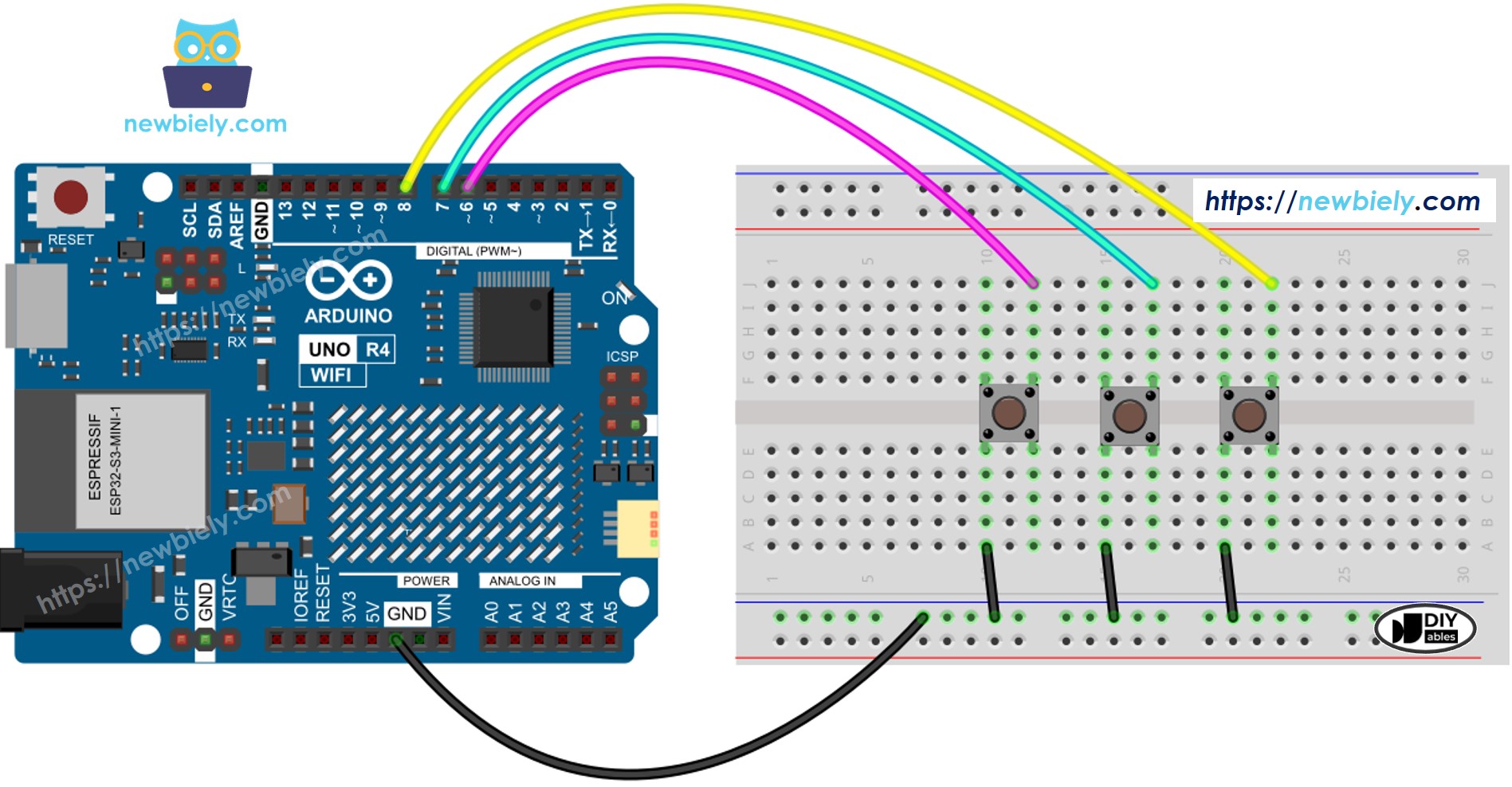
This image is created using Fritzing. Click to enlarge image
Video Tutorial
Việc sản xuất video tốn rất nhiều thời gian. Nếu video hướng dẫn hữu ích cho việc học của bạn, hãy đăng ký kênh YouTube để ủng hộ. Nếu nhu cầu đủ cao, chúng tôi sẽ cố gắng làm thêm nhiều video.
Bài hướng dẫn liên quan
📱 Ứng dụng đề xuất
 English for KidsHọc tiếng Anh vui nhộn cho trẻ nhỏ.Tải về trênGoogle PlayTải về trênApp Store
 Bubble NoteGhi chú tự xóa — viết như nhắn tin.Tải về trênGoogle PlayTải về trênApp Store
 Tôi Không MuaĐánh bại mua sắm bốc đồng, tiết kiệm hơn.Tải về trênGoogle PlayTải về trênApp Store
 Con Đường Tri ThứcBài thi thử để học mọi thứ.Tải về trênGoogle PlayTải về trênApp Store