
Arduino Thông báo email khi cửa mở
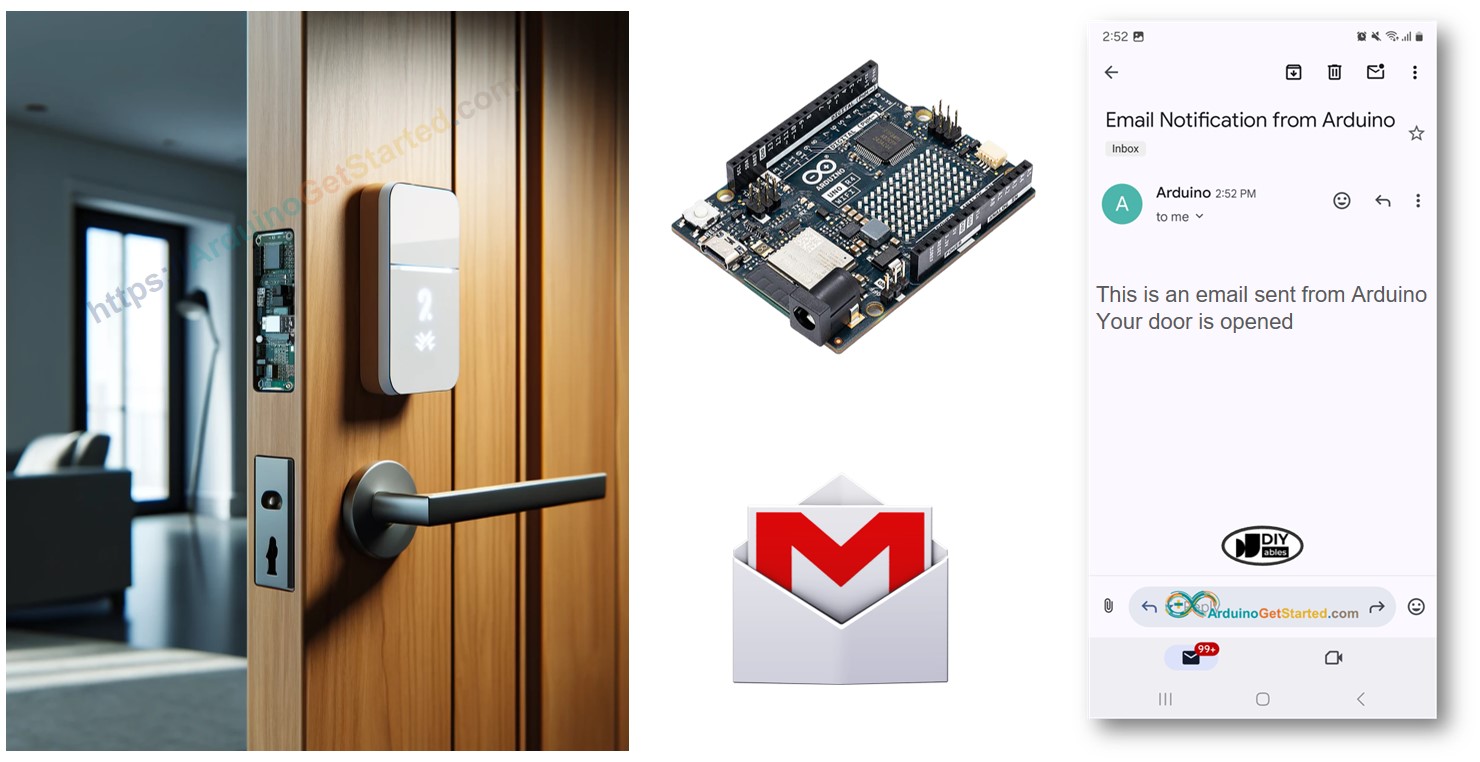
Trong hướng dẫn này, chúng ta sẽ học cách sử dụng Arduino để gửi email khi cửa mở. Chúng ta sẽ giải thích cách thiết lập nó, những bộ phận bạn cần, và cung cấp cho bạn các bước chi tiết để kết nối Arduino với cảm biến cửa và một dịch vụ email. Điều này sẽ giúp tăng cường an ninh cho ngôi nhà của bạn bằng cách gửi cho bạn các cảnh báo email ngay lập tức khi cửa mở.
Phần cứng cần chuẩn bị
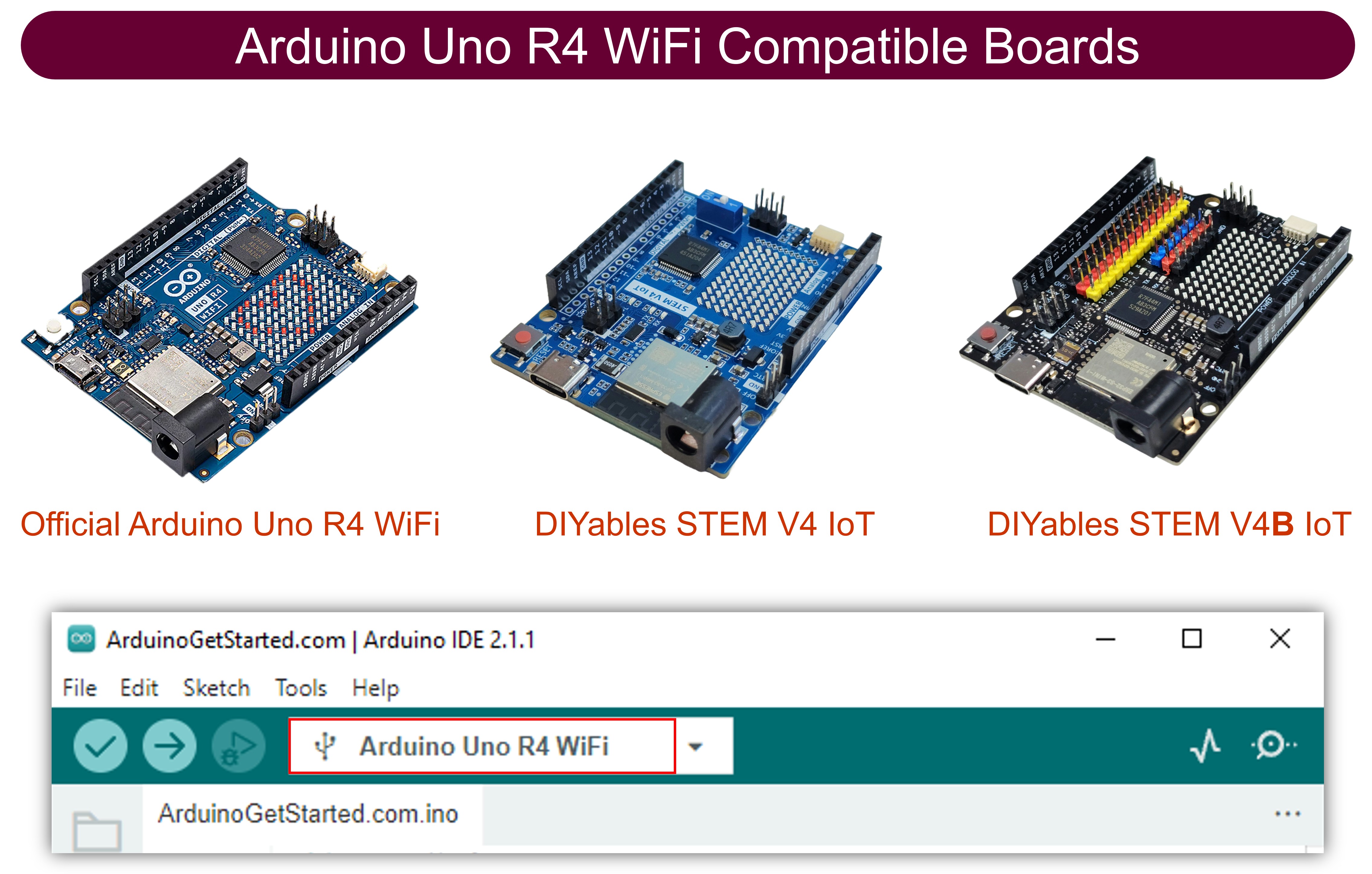
| 1 | × | Arduino UNO R4 WiFi | Amazon | |
| 1 | × | Alternatively, DIYables STEM V4 IoT | Amazon | |
| 1 | × | Alternatively, DIYables STEM V4B IoT | Amazon | |
| 1 | × | (Tùy chọn) DIYables STEM V4 IoT | Amazon | |
| 1 | × | USB Cable Type-A to Type-C (for USB-A PC) | Amazon | |
| 1 | × | USB Cable Type-C to Type-C (for USB-C PC) | Amazon | |
| 1 | × | cảm biến cửa | Amazon | |
| 1 | × | breadboard | Amazon | |
| 1 | × | dây jumper | Amazon | |
| 1 | × | (Tùy chọn) DC Power Jack | Amazon | |
| 1 | × | (Khuyến nghị) Screw Terminal Block Shield for Arduino UNO R4 | Amazon | |
| 1 | × | (Khuyến nghị) Sensors/Servo Expansion Shield for Arduino UNO R4 | Amazon | |
| 1 | × | (Khuyến nghị) Breadboard Shield for Arduino UNO R4 | Amazon | |
| 1 | × | (Khuyến nghị) Enclosure for Arduino UNO R4 | Amazon | |
| 1 | × | (Khuyến nghị) Power Splitter for Arduino UNO R4 | Amazon | |
| 1 | × | (Khuyến nghị) Prototyping Base Plate & Breadboard Kit for Arduino UNO | Amazon |
Or you can buy the following kits:
| 1 | × | DIYables STEM V4 IoT Starter Kit (Arduino included) | Amazon | |
| 1 | × | DIYables Sensor Kit (18 sensors/displays) | Amazon |
Về cảm biến cửa và Gmail
Chúng tôi cung cấp các bài hướng dẫn chi tiết về Cảm biến cửa và Gmail. Mỗi hướng dẫn đều bao gồm các chi tiết toàn diện và các chỉ dẫn rõ ràng, theo trình tự từng bước về cách lắp đặt phần cứng, nguyên lý hoạt động, và cách kết nối và lập trình Arduino. Bạn có thể tìm hiểu thêm về các hướng dẫn này thông qua các liên kết sau:
- Arduino - Cảm biến cửa hướng dẫn
- Arduino - Gmail hướng dẫn
Sơ đồ nối dây giữa cảm biến cửa và Arduino
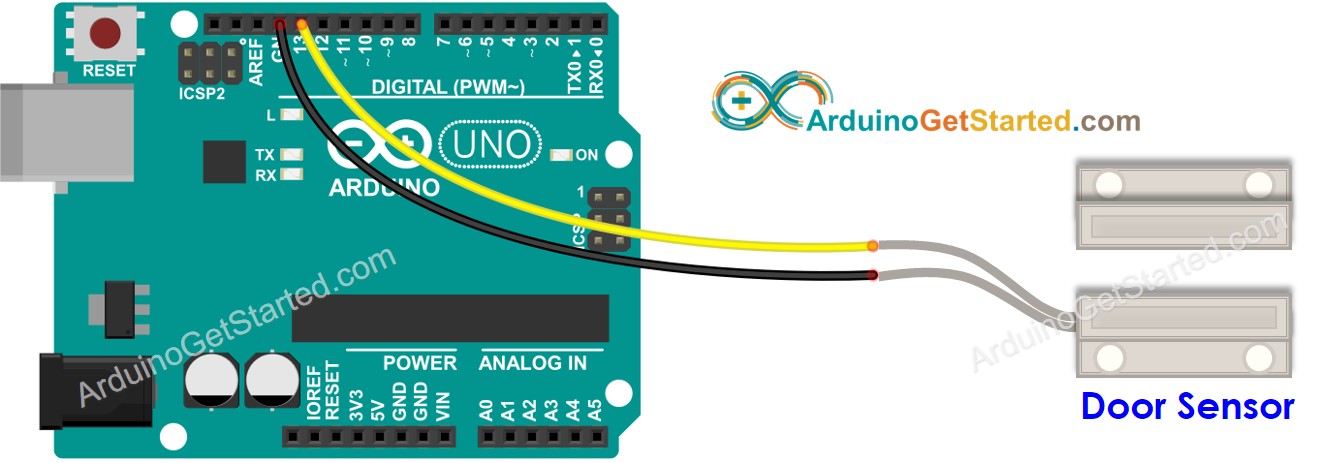
This image is created using Fritzing. Click to enlarge image
Mã Arduino
Hướng dẫn từng bước
- Nếu đây là lần đầu bạn sử dụng Arduino Uno R4, xem Cách bắt đầu với Arduino UNO R4.
- Gắn cảm biến cửa lên cửa của bạn.
- Kết nối bo mạch Arduino với cảm biến cửa.
- Kết nối bo mạch Arduino với máy tính của bạn bằng cáp micro USB.
- Mở Arduino IDE trên máy tính của bạn.
- Chọn bo mạch Arduino phù hợp (Arduino Uno R4 WiFi) và cổng COM.
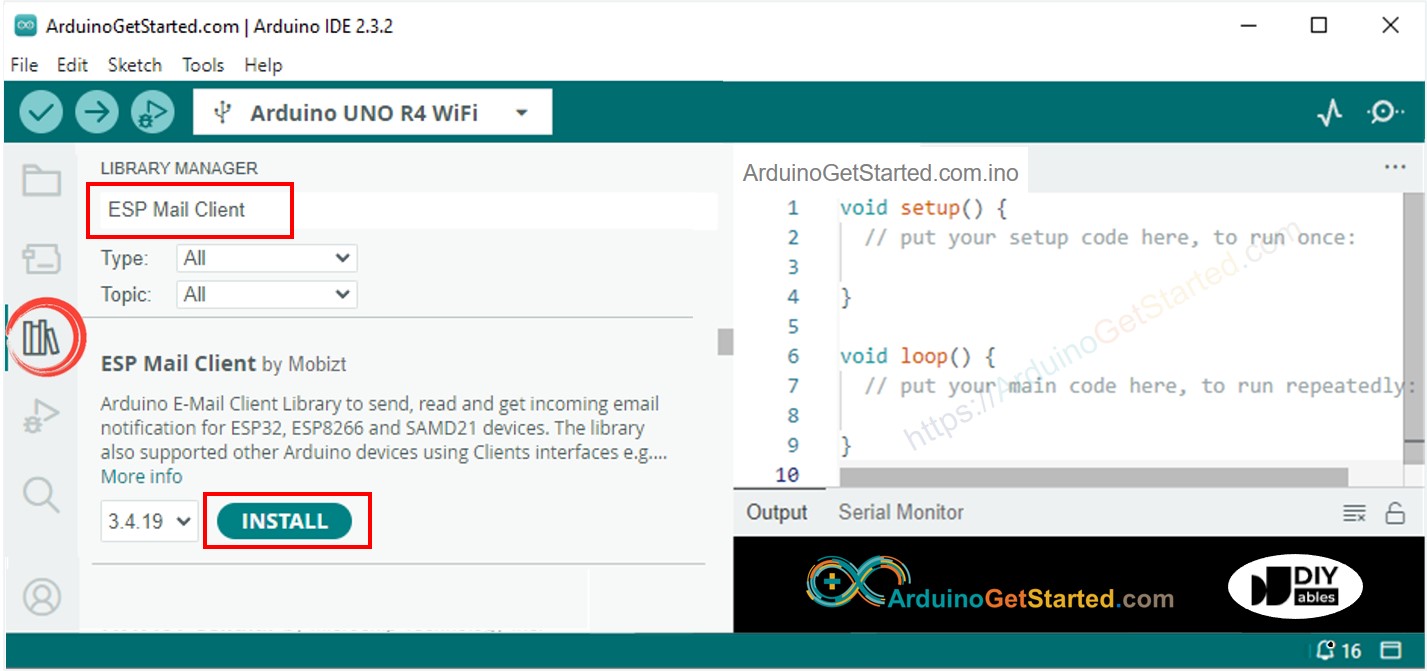
- Trong Arduino IDE, nhấp vào biểu tượng 'Trình quản lý thư viện' ở thanh bên trái để mở nó.
- Nhập ESP Mail Client vào ô tìm kiếm, và tìm ESP Mail Client do Mobizt.
- Nhấp nút Cài đặt để thêm thư viện ESP Mail Client.
- Sao chép mã được cung cấp và mở nó bằng Arduino IDE.
- Cập nhật chi tiết WiFi của bạn (tên mạng và mật khẩu) trong mã. Thay đổi giá trị của WIFI_SSID và WIFI_PASSWORD thành của bạn.
- Chỉnh sửa địa chỉ email và mật khẩu của người gửi trong mã. Thay đổi SENDER_EMAIL và SENDER_PASSWORD.
※ Lưu ý:
Hãy đảm bảo email của người gửi thuộc Gmail. Sử dụng mật khẩu ứng dụng từ bước trước làm mật khẩu của người gửi. Email của người nhận có thể là bất kỳ loại email nào.
- Nhấn nút Tải lên trong Arduino IDE để tải mã lên Arduino
- Mở Serial Monitor
- Mở cửa
- Xem kết quả trên Serial Monitor.
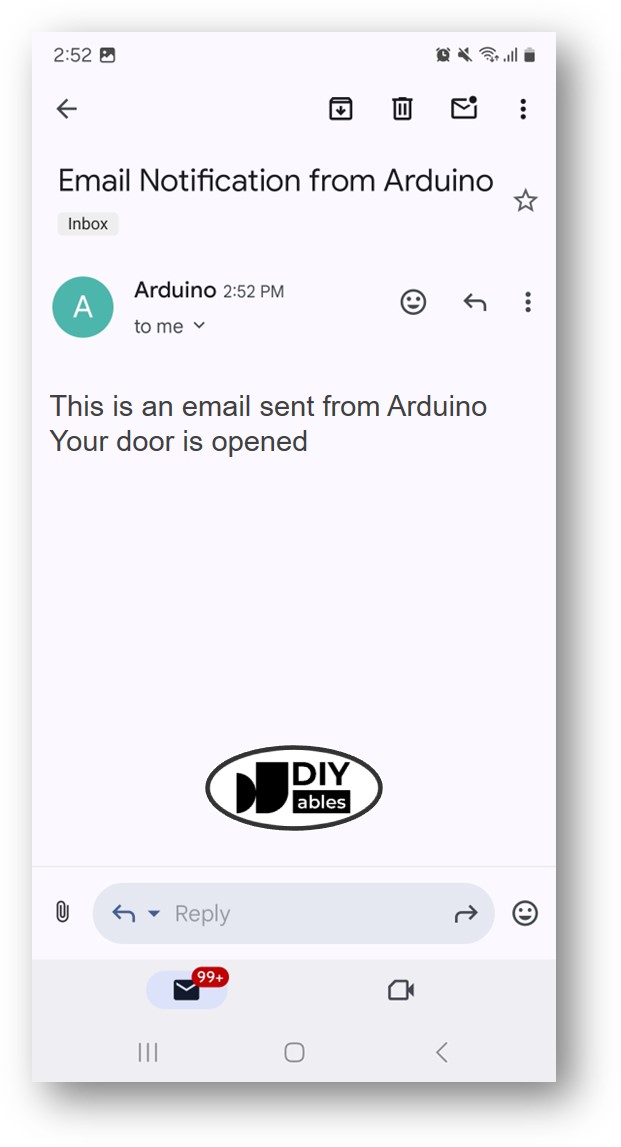
- Kiểm tra hộp thư đến email của người nhận. Bạn sẽ nhận được một email tương tự như sau:
Video Tutorial
Việc sản xuất video tốn rất nhiều thời gian. Nếu video hướng dẫn hữu ích cho việc học của bạn, hãy đăng ký kênh YouTube để ủng hộ. Nếu nhu cầu đủ cao, chúng tôi sẽ cố gắng làm thêm nhiều video.
Bài hướng dẫn liên quan
📱 Ứng dụng đề xuất
 English for KidsHọc tiếng Anh vui nhộn cho trẻ nhỏ.Tải về trênGoogle PlayTải về trênApp Store
 Bubble NoteGhi chú tự xóa — viết như nhắn tin.Tải về trênGoogle PlayTải về trênApp Store
 Tôi Không MuaĐánh bại mua sắm bốc đồng, tiết kiệm hơn.Tải về trênGoogle PlayTải về trênApp Store
 Con Đường Tri ThứcBài thi thử để học mọi thứ.Tải về trênGoogle PlayTải về trênApp Store