
ESP32 Đồng hồ OLED
Trong hướng dẫn này, chúng tôi sẽ hướng dẫn bạn qua quy trình tạo một chiếc đồng hồ OLED bằng ESP32 thông qua các bước sau:
- Đọc thời gian hiện tại (giờ, phút, giây) từ module RTC DS3231 và hiển thị trên OLED.
- Đọc thời gian hiện tại (giờ, phút, giây) từ module RTC DS1307 và hiển thị trên OLED.
Bạn có sự linh hoạt để lựa chọn giữa hai module RTC: DS3231 và DS1307. Để giúp bạn đưa ra quyết định sáng suốt, bạn có thể tham khảo so sánh được nêu trong DS3231 vs DS1307.
Hướng dẫn này sẽ cung cấp một hướng dẫn toàn diện để thực hiện một chiếc đồng hồ OLED, trình bày sự tích hợp của ESP32 với module RTC DS3231 hoặc DS1307 để hiển thị thông tin thời gian chính xác trên màn hình OLED.
Phần Cứng Cần Thiết
| 1 | × | 38-pin ESP32 ESP-WROOM-32 Dev Module - Narrow | Amazon | |
| 1 | × | Alternatively, 38-pin ESP32 ESP-WROOM-32 Dev Module - Wide | Amazon | |
| 1 | × | Alternatively, 30-pin ESP32 ESP-WROOM-32 Dev Module - Wide | Amazon | |
| 1 | × | Alternatively, ESP32 Uno-form board | Amazon | |
| 1 | × | Alternatively, ESP32 S3 Uno-form board | Amazon | |
| 1 | × | Cáp USB Type-C | Amazon | |
| 1 | × | Màn hình OLED SSD1306 I2C 128x64 | Amazon | |
| 1 | × | Màn hình OLED SSD1306 I2C 128x32 | Amazon | |
| 1 | × | Module Real-Time Clock DS3231 | Amazon | |
| 1 | × | Module Real-Time Clock DS1307 (Tùy chọn) | Amazon | |
| 1 | × | Pin CR2032 | Amazon | |
| 1 | × | breadboard | Amazon | |
| 1 | × | Dây Jumper | Amazon | |
| 1 | × | (Khuyến nghị) Screw Terminal Expansion Board for ESP32 | Amazon | |
| 1 | × | (Khuyến nghị) Breakout Expansion Board for ESP32 | Amazon | |
| 1 | × | (Khuyến nghị) Power Splitter for ESP32 | Amazon |
Or you can buy the following kits:
| 1 | × | DIYables ESP32 Starter Kit (ESP32 included) | Amazon | |
| 1 | × | DIYables Sensor Kit (18 sensors/displays) | Amazon |
Về OLED, DS3231 và module RTC DS1307
Chưa quen với OLED, DS3231 và DS1307, bao gồm pinout, chức năng và lập trình? Khám phá các hướng dẫn toàn diện về những chủ đề này dưới đây:
Cài Đặt Thư Viện OLED và RTC
- Nhấp vào biểu tượng Libraries trên thanh bên trái của Arduino IDE.
- Tìm kiếm "SSD1306", sau đó tìm thư viện SSD1306 của Adafruit
- Nhấp nút Install để cài đặt thư viện.
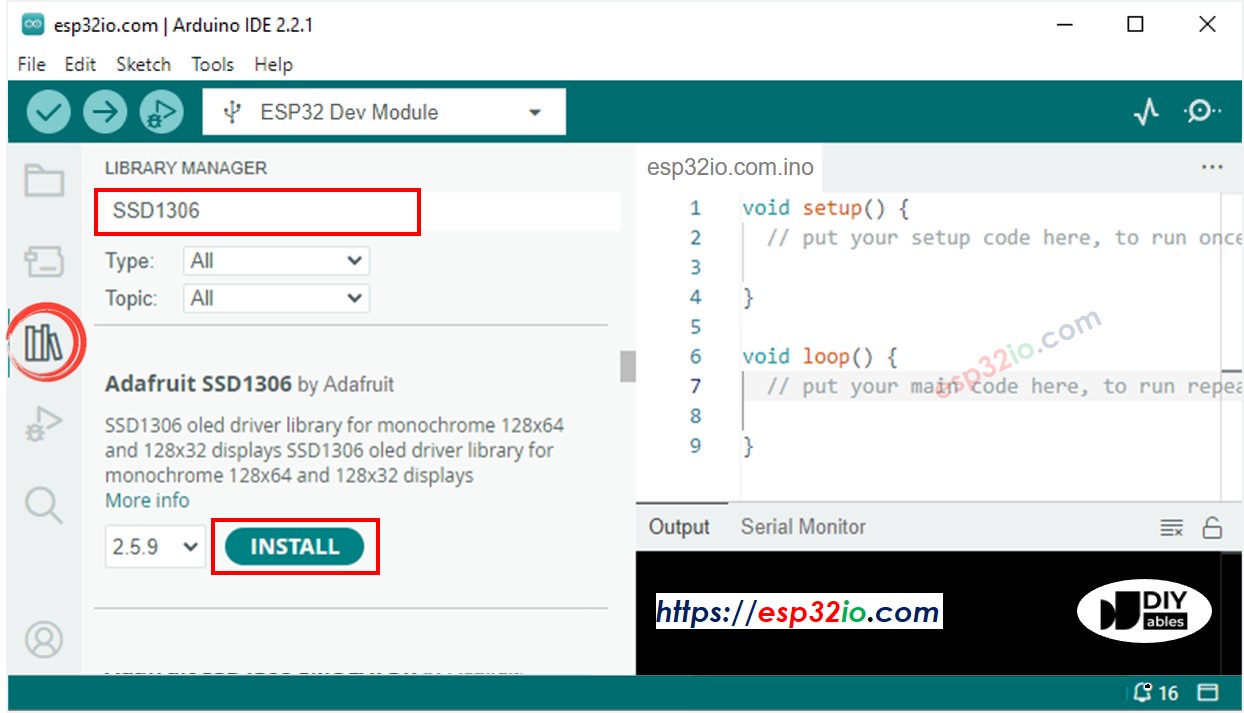
- Bạn sẽ được yêu cầu cài đặt một số thư viện phụ thuộc khác
- Nhấp nút Install All để cài đặt tất cả thư viện phụ thuộc.
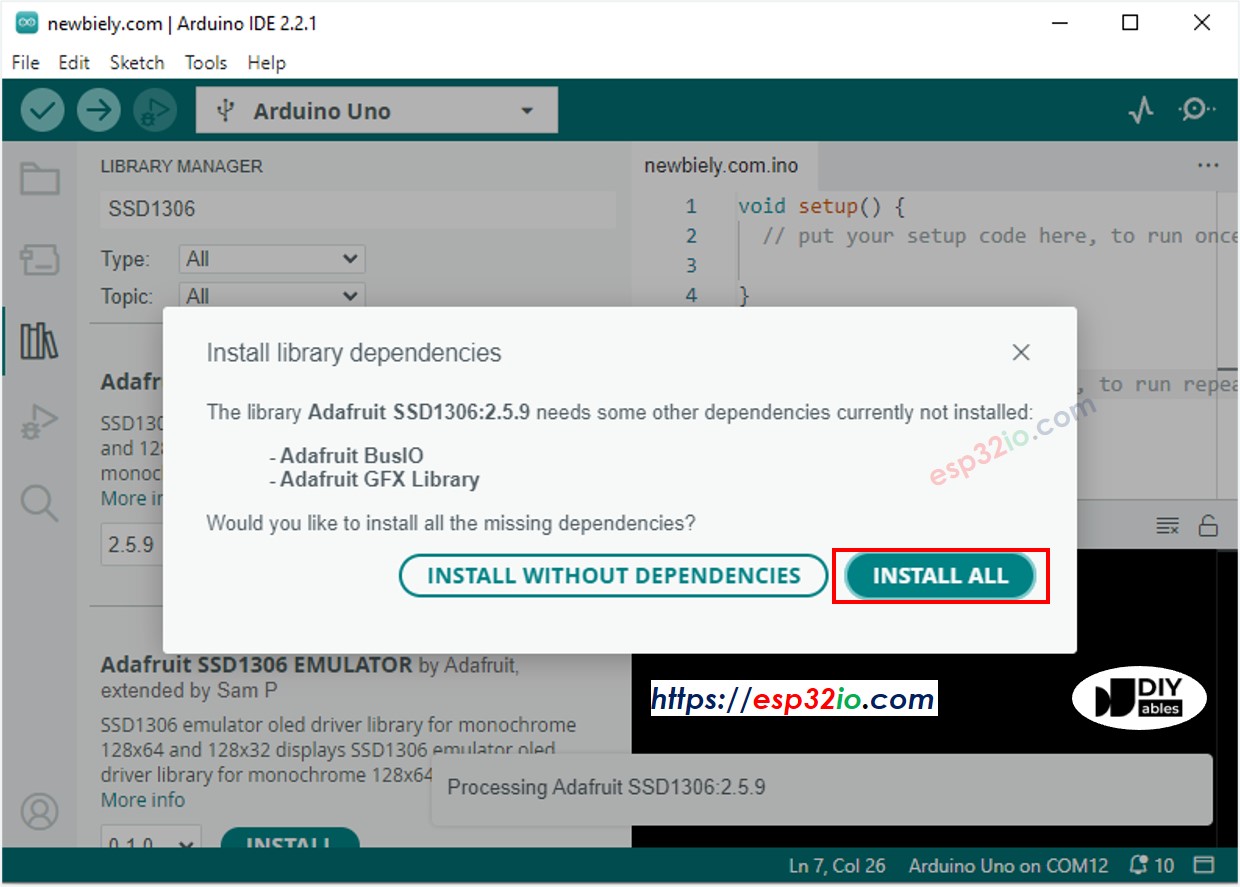
- Tìm kiếm "RTClib", sau đó tìm thư viện RTC của Adafruit
- Nhấp nút Install để cài đặt thư viện RTC.
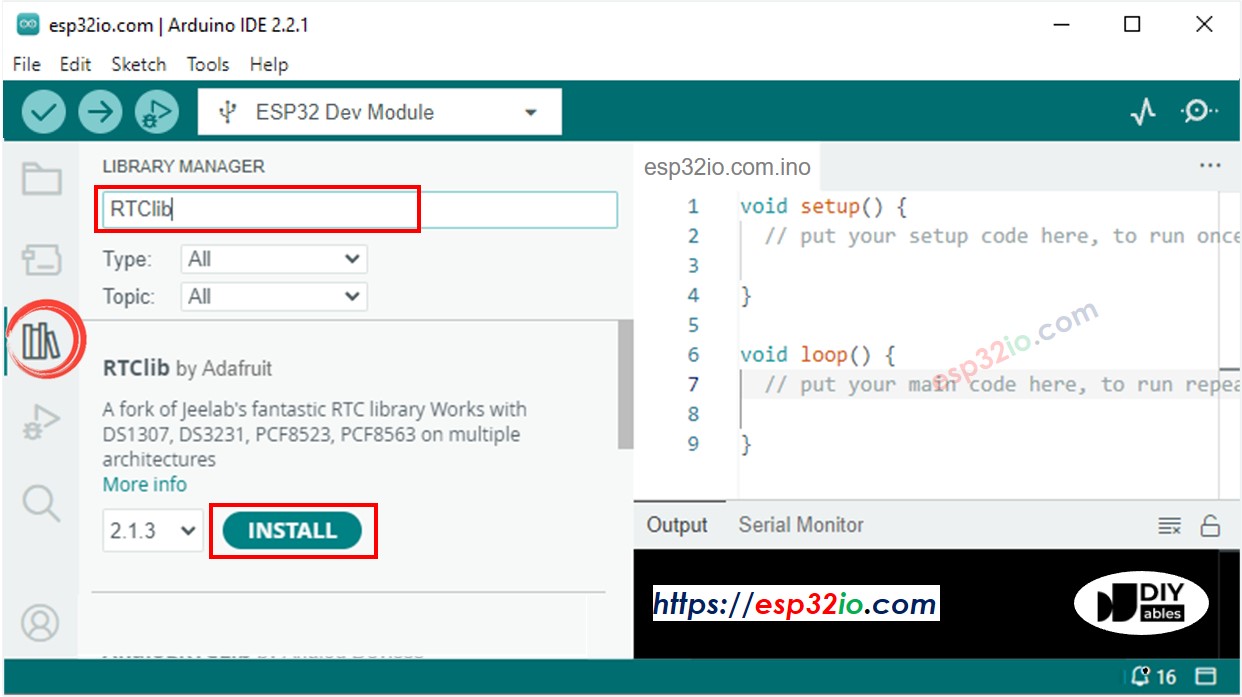
- Bạn có thể được yêu cầu cài đặt các thư viện phụ thuộc
- Cài đặt tất cả thư viện phụ thuộc bằng cách nhấp nút Install All.
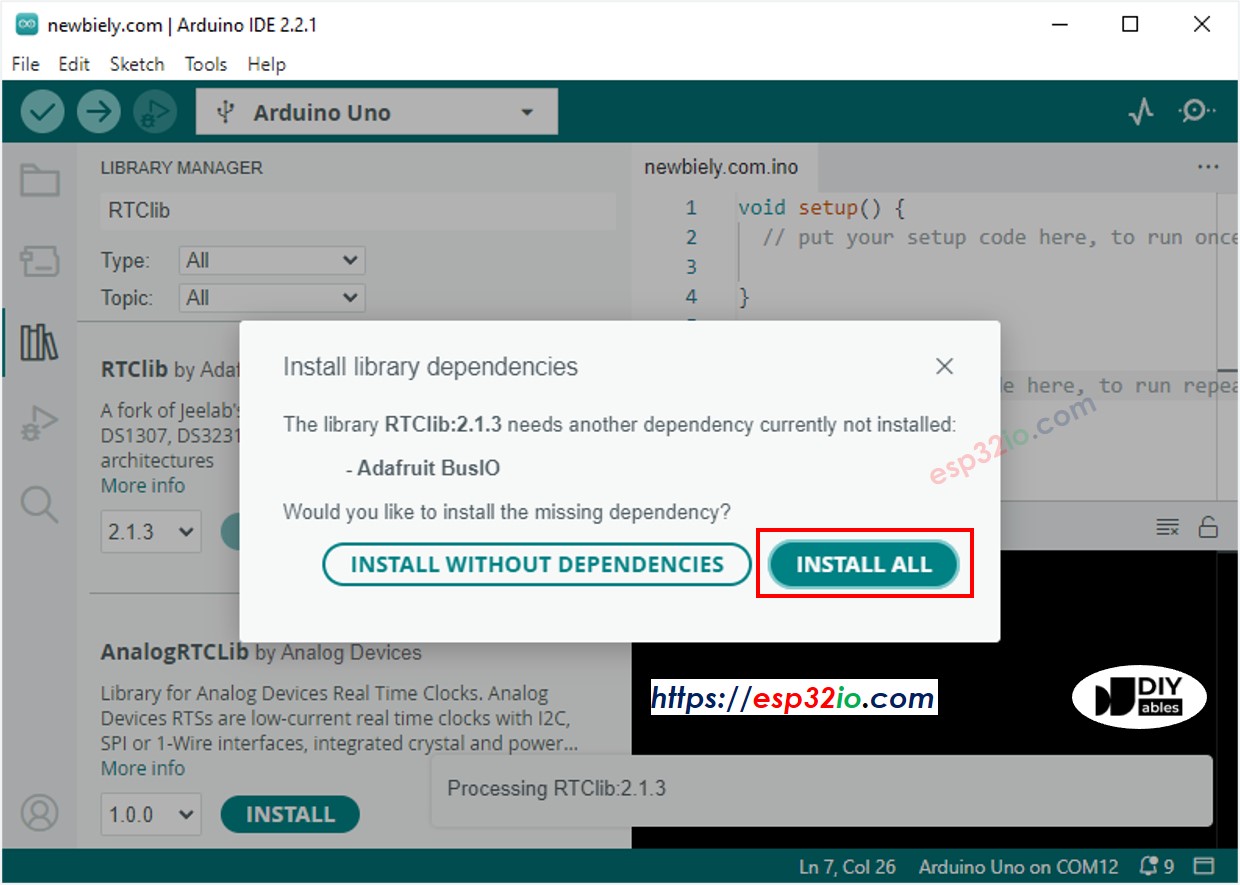
Đọc thời gian từ module RTC DS3231 và hiển thị trên OLED
Sơ Đồ Kết Nối
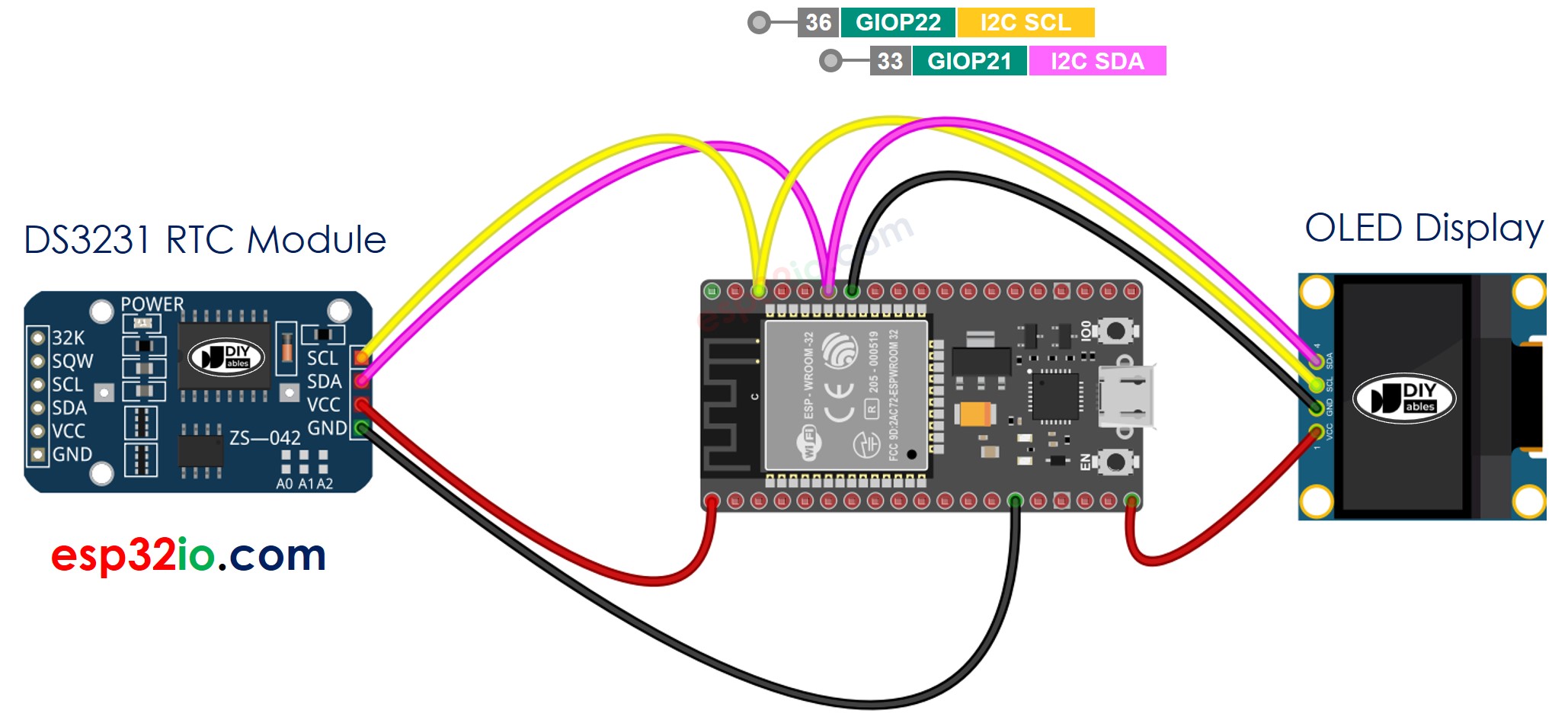
This image is created using Fritzing. Click to enlarge image
Nếu bạn chưa rõ cách cấp nguồn cho ESP32 và các linh kiện khác, xem: Cách Cung Cấp Nguồn Điện Cho ESP32.
Code ESP32 - DS3231 và OLED
Các Bước Thực Hiện
- Mới sử dụng ESP32? Hãy bắt đầu với hướng dẫn ESP32 - Cài Đặt Phần Mềm để học các kiến thức cơ bản trước.
- Thực hiện kết nối dây như hình trên.
- Kết nối bo mạch ESP32 với PC qua cáp micro USB
- Mở Arduino IDE trên PC.
- Chọn đúng bo mạch ESP32 (ví dụ: ESP32 Dev Module) và cổng COM.
- Sao chép code trên và mở bằng Arduino IDE
- Nhấp nút Upload trên Arduino IDE để upload code lên ESP32
- Xem kết quả trên OLED
Đọc thời gian từ module RTC DS1307 và hiển thị trên OLED
Sơ Đồ Kết Nối
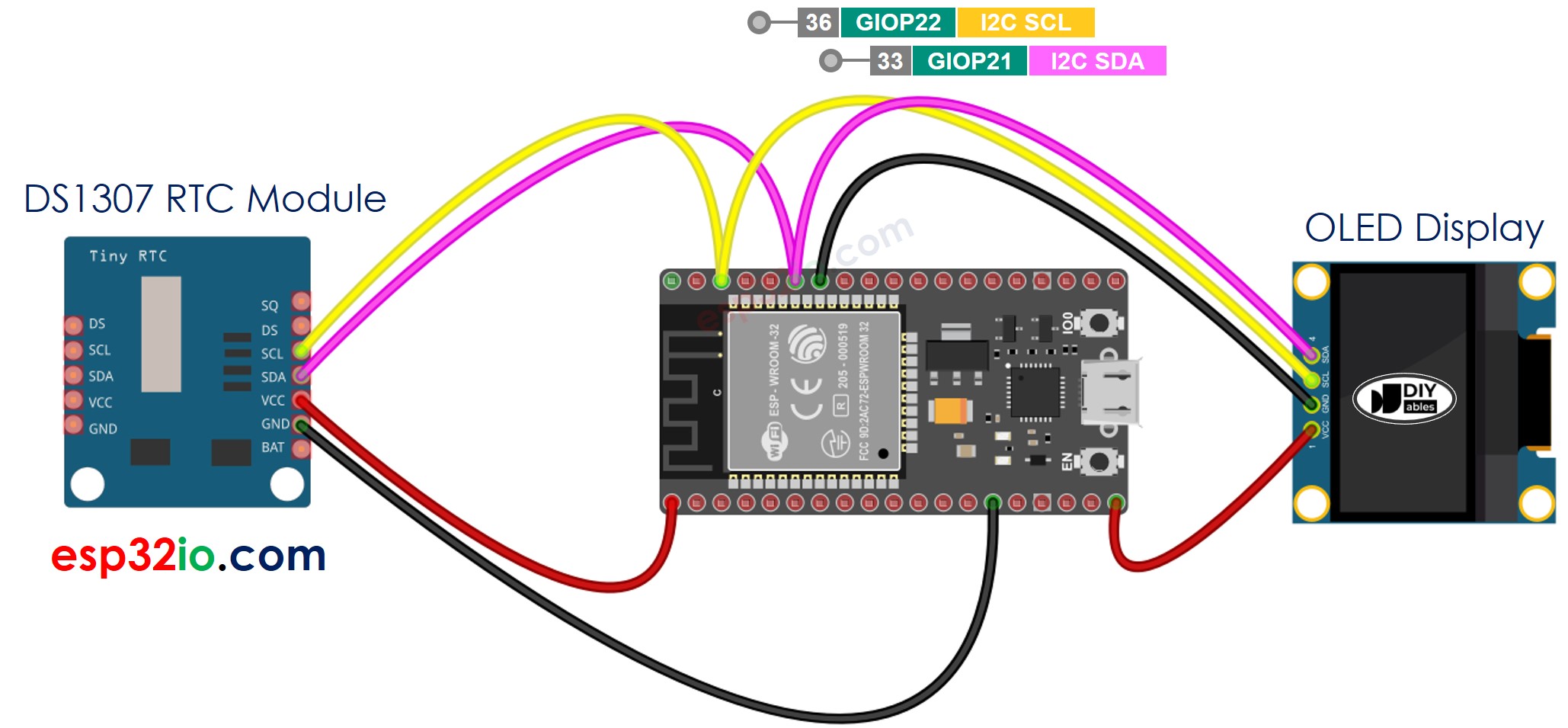
This image is created using Fritzing. Click to enlarge image
Code ESP32 - DS1307 và OLED
Các Bước Thực Hiện
- Mới sử dụng ESP32? Hãy bắt đầu với hướng dẫn ESP32 - Cài Đặt Phần Mềm để học các kiến thức cơ bản trước.
- Thực hiện kết nối dây như hình trên.
- Kết nối bo mạch ESP32 với PC qua cáp micro USB
- Mở Arduino IDE trên PC.
- Chọn đúng bo mạch ESP32 (ví dụ: ESP32 Dev Module) và cổng COM.
- Sao chép code trên và mở bằng Arduino IDE
- Nhấp nút Upload trên Arduino IDE để upload code lên ESP32
- Xem kết quả trên OLED
Video Tutorial
Việc sản xuất video tốn rất nhiều thời gian. Nếu video hướng dẫn hữu ích cho việc học của bạn, hãy đăng ký kênh YouTube để ủng hộ. Nếu nhu cầu đủ cao, chúng tôi sẽ cố gắng làm thêm nhiều video.
Bình Luận
Bài hướng dẫn liên quan
📱 Ứng dụng đề xuất
 English for KidsHọc tiếng Anh vui nhộn cho trẻ nhỏ.Tải về trênGoogle PlayTải về trênApp Store
 Bubble NoteGhi chú tự xóa — viết như nhắn tin.Tải về trênGoogle PlayTải về trênApp Store
 Tôi Không MuaĐánh bại mua sắm bốc đồng, tiết kiệm hơn.Tải về trênGoogle PlayTải về trênApp Store
 Con Đường Tri ThứcBài thi thử để học mọi thứ.Tải về trênGoogle PlayTải về trênApp Store